


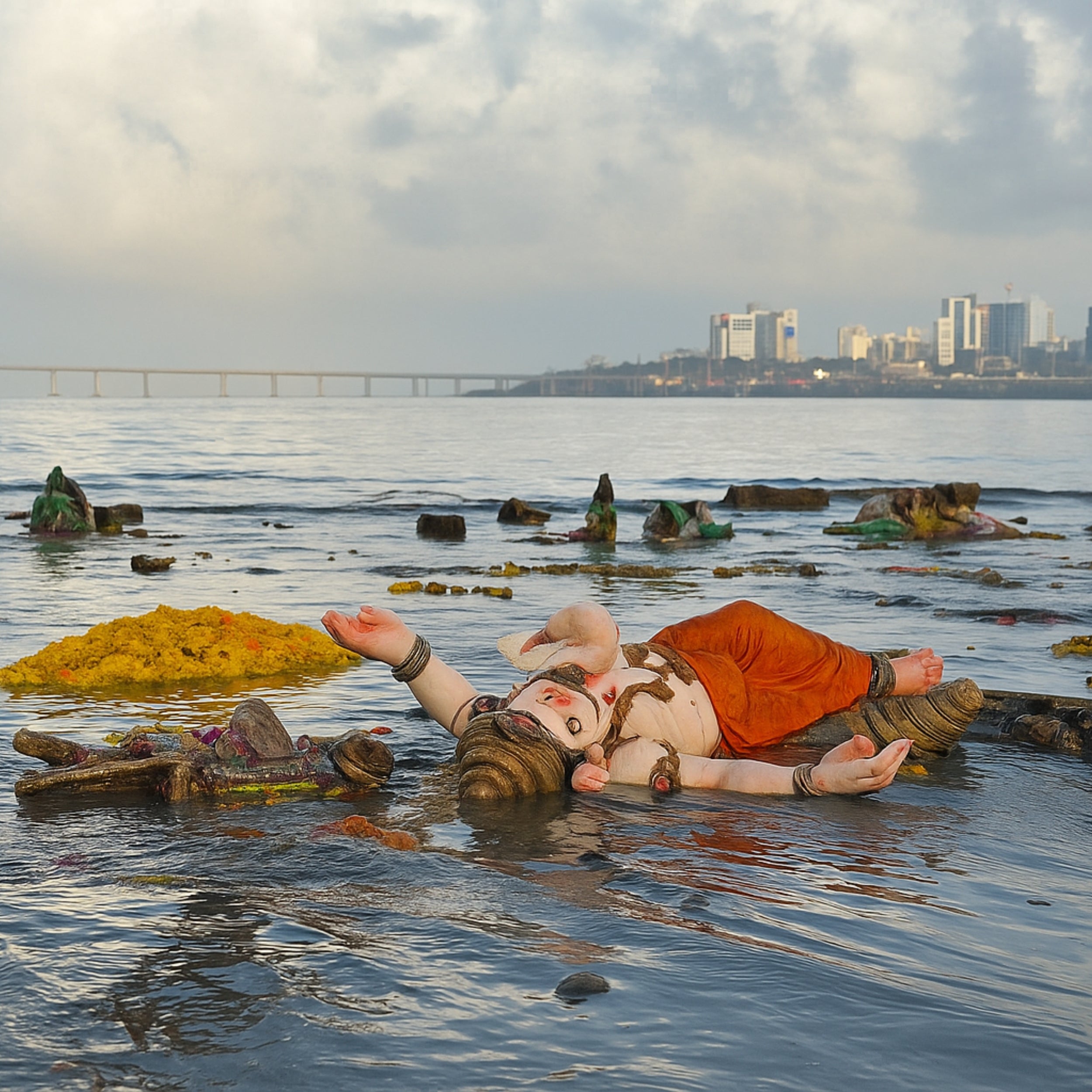
The Problem: PoP Idols and Environmental Pollution
Ganesh Chaturthi sees the immersion of lakhs of idols each year, but the rise of Plaster of Paris (PoP) idols has created an environmental crisis. Maharashtra alone generates over 4,500 tonnes of PoP idol waste annually, with Mumbai adding 675 tonnes from 1.5 lakh immersions (MPCB Report 2023).
Unlike clay idols that dissolve quickly, the PoP ones made from gypsum and reinforced with fibres, remain in water bodies for months. As it breaks down, it releases heavy metals like lead, cadmium, and mercury from paints, contaminating rivers, lakes, and coasts. This disrupts water chemistry, reduces oxygen levels, and suffocates aquatic life.
The impact extends further: mangroves are damaged, ecosystems destabilized, and toxic metals accumulate in the food chain, eventually reaching humans through seafood. Long-term risks include neurological disorders, kidney damage, and developmental issues in children.
What begins as devotion thus becomes an ecological hazard, showing how unregulated PoP idol immersions threaten biodiversity, water quality, and public health.
