

Product Description
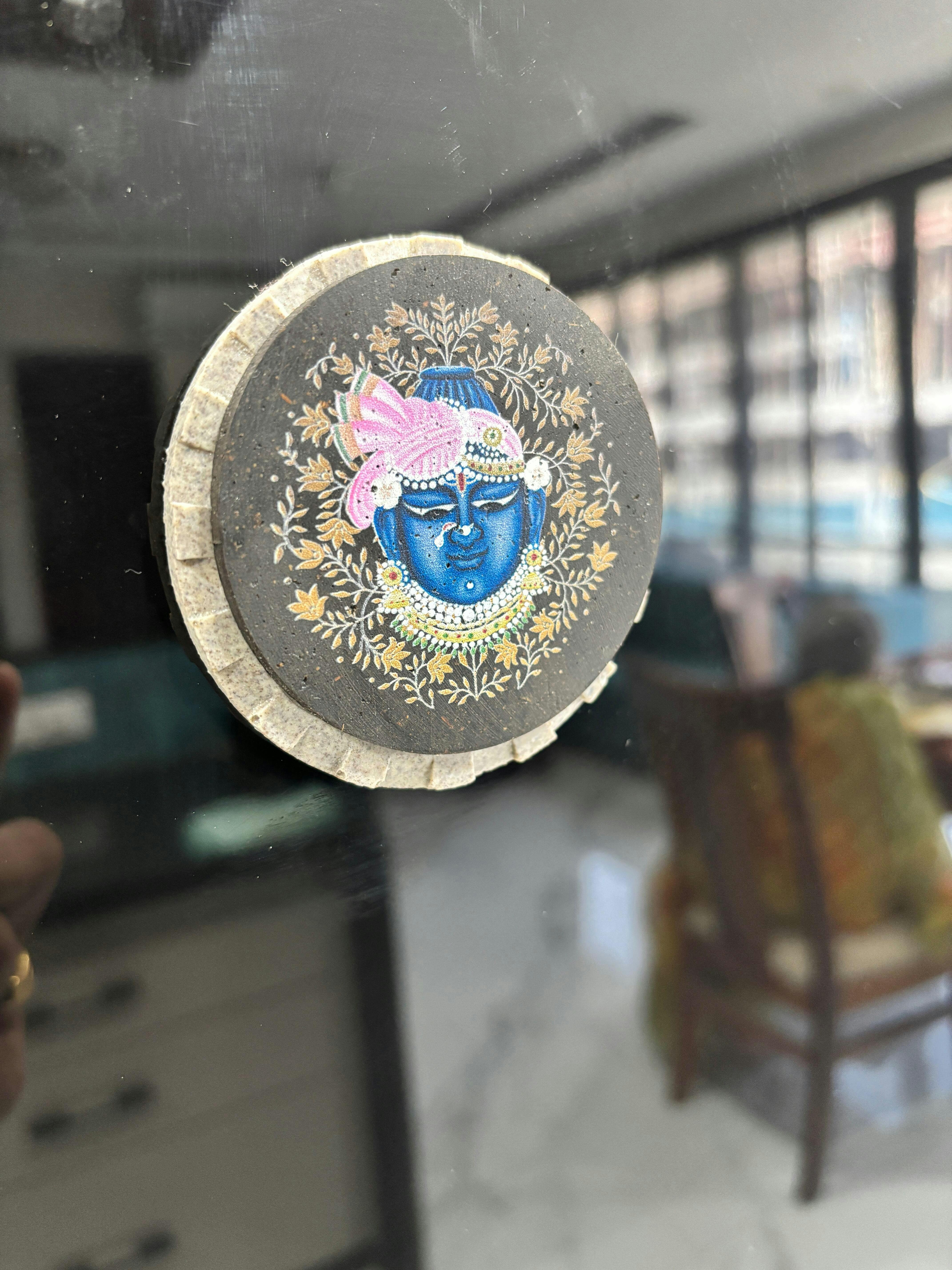
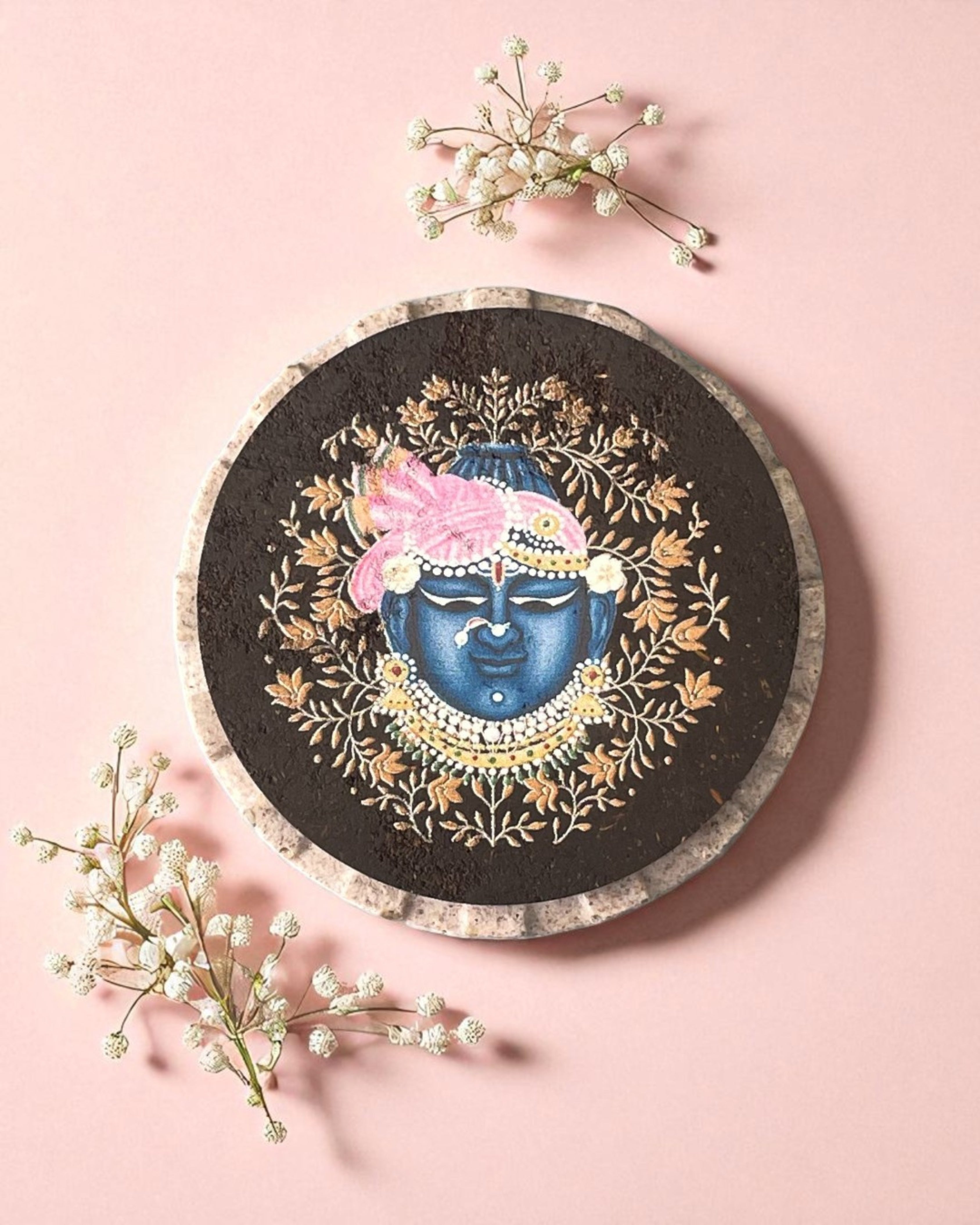
Invite the sacred presence of Shrinathji into your daily life with this Aastha Magnet, handmade from flowers once offered at His temple and Havelis. Through sustainable craftsmanship, the sacred offerings are transformed into a meaningful keepsake. Featuring a beautifully detailed print of Shrinathji’s Mukharvind, the magnet radiates divine blessings and artistic charm. Place it on your fridge, wardrobe, or any magnetic surface to bring a daily reminder of faith, grace, and beauty, perfect for personal devotion or gifting.
Every day, flowers are offered before Shrinathji at the temple in Nathdwara. They carry the prayers of everyone who placed them there. After they complete their purpose in worship, Pushpam artisans gather them — before they are swept away — and shape them into something that continues to carry that devotion forward.
This Aastha Magnet keeps the Mukharvind, Shrinathji's sacred face, in a Pichhwai style, painted by Vaibhavi Gandhi. Place it on your fridge, wardrobe, or any magnetic surface. A quiet darshan moment, wherever your day takes you.
The magnet that carries His image is made from the offerings placed before that image. That thread — from altar to artisan to your home — does not break.
Vaibhavi Gandhi
Vaibhavi Gandhi's rendering of the Mukharvind works within the Pichhwai visual language — the dark background that makes the face luminous, the gold of the crown, the warmth of the blue complexion. These are not choices made for aesthetics. They are choices made out of devotion.
What's in the Box
- 1 × Aastha Magnet – Mukharvind (Circle)
- 1 × Strong magnetic backing
Dimensions: 7.5 cm × 7.5 cm · Weight: 31 gms
The Mukharvind — The Sacred Face
In Pushtimarg, the Mukharvind is the sacred face of Shrinathji. Here mukh means "face" and arvind means "lotus." Devotees hold that simply gazing at the Mukharvind is puja on its own — a direct, intimate darshan of the Lord's face.
The tilak, the floral crown, the ornaments, the expression — every detail follows the iconographic precision that the Pichhwai tradition has maintained for centuries. This is not decoration. This is darshan.
The Mukharvind magnet brings that experience into the spaces where a devotee lives, moves, and pauses. It is on the fridge before the day starts, on the almirah beside the pooja shelf, on the workstation board as a calm, steady presence. Wherever it sits, the same offering — a small interval of His face in the middle of daily life, not grand, just there.
Pichhwai — The Art Born for This Image
Pichhwai paintings were made to hang behind the Shrinathji murti in the Nathdwara temples. The word itself means "that which hangs behind." The tradition is more than 400 years old, and every element within it — the ornaments, the colours, the lotus motifs, and even the expression of the face — follows a visual language that temple artists developed over generations.
Vaibhavi Gandhi's rendering works within that language: the dark background that makes the face luminous, the gold of the crown, the warmth of the blue complexion. These are not aesthetic choices. They are choices made out of devotion.
Made from Shrinathji's Own Flowers
The base of this magnet is made from flowers that were offered at the Shrinathji temple in Nathdwara and at Havelis across Rajasthan — flowers that were placed before His face.
After fulfilling their purpose in worship, they are gathered by Pushpam artisans, dried, ground, and shaped into the flower-composite that forms every Aastha Magnet. The magnet that carries His image is made from the offerings placed before that image. That thread, from altar to artisan to your home, does not break.
Key Features
Mukharvind · Sacred Face as Daily Darshan
Shrinathji's sacred face for Pushtimarg devotees — an intimate darshan in the tradition of Nathdwara temple iconography.
Pichhwai-Inspired Artwork by Vaibhavi Gandhi
Faithful to the 400-year Nathdwara temple tradition — rich colour, gold crown, luminous face against a dark ground.
From Shrinathji Temple Flowers
Handcrafted from upcycled flowers offered at the Shrinathji temple in Nathdwara and Havelis across Rajasthan.
Scalloped Stone-Textured Border
A circular medallion border frames the face like a temple medallion — textured to feel as considered as it looks.
Strong Magnetic Backing Included
Attaches to any magnetic metal surface — fridge, almirah, workstation board, steel wardrobe.
Verified Sustainable Impact
175 gms flower material recycled. 500 gms CO₂ emissions avoided. Certified by Pushpam's sustainability process.
Specifications
| Dimensions | 7.5 cm × 7.5 cm |
| Weight | 31 gms |
| Top Material | Upcycled Flower Composite |
| Base Material | Recycled POP & Upcycled Flower |
| Art Style | Pichhwai |
| Artist | Vaibhavi Gandhi |
| Collection | Shrinath Ji |
| Mount Type | Magnetic backing |
| Use | Place on fridge, almirah, workstation board, or any magnetic metal surface for daily darshan |
Use & Care
How to Use
- Place on any magnetic metal surface — fridge, almirah, steel wardrobe, workstation board
- Place near your home pooja space as a compact, portable darshan piece
- A meaningful gift for Janmashtami, Annakut, Govardhan Puja, or any Pushtimarg occasion
- Combine with other Shrinath Ji collection pieces for a complete sacred display
Care Guide
- Wipe gently with a dry cloth — keep away from moisture and water
- Minor base softening may occur with prolonged heat or direct sunlight — it firms back up once cooled
- Treat the Pichhwai print surface with care to preserve its detail and colour
- Avoid direct incense smoke on the surface to protect the print
Before You Ask, We've Answered
Mukharvind means "the lotus face" — the sacred visage of Shrinathji as seen in Pichhwai art and temple iconography. In Pushtimarg, to look upon the Mukharvind is itself an act of puja. Every detail follows centuries of iconographic tradition established by Nathdwara temple artists.
It is both — a magnet with strong magnetic backing for any metal surface, and a sacred daily darshan piece. Works on fridges, almirahs, wardrobes, workstation boards, and steel door panels.
Yes. The base is made from flowers offered at the Shrinathji temple in Nathdwara and at Havelis across Rajasthan, gathered after worship, dried, ground, and shaped into the composite. The origin is authentic and traceable.
Pichhwai paintings were made to hang behind the Shrinathji murti in the Nathdwara temples — the word means "that which hangs behind." Over more than 400 years, temple artists refined an exact visual language for depicting Shrinathji: rich colours, gold accents, lotus patterns. Every stroke carries devotion, not mere decoration.
It is one of the most specifically meaningful products for Pushtimarg devotees. The Mukharvind form, the Pichhwai style, and the Shrinathji temple flower origin make it deeply connected to the tradition — a devotional object with a traceable sacred lineage.